Quinta da Monte
Santa Comba · Ponte de Lima · Portugal
Twenty thousand square metres of vineyard, orchard, and old granite, about twenty minutes on foot from Ponte de Lima — the oldest town in Portugal.
Twenty thousand square metres of vineyard, orchard, and old granite, about twenty minutes on foot from Ponte de Lima — the oldest town in Portugal.
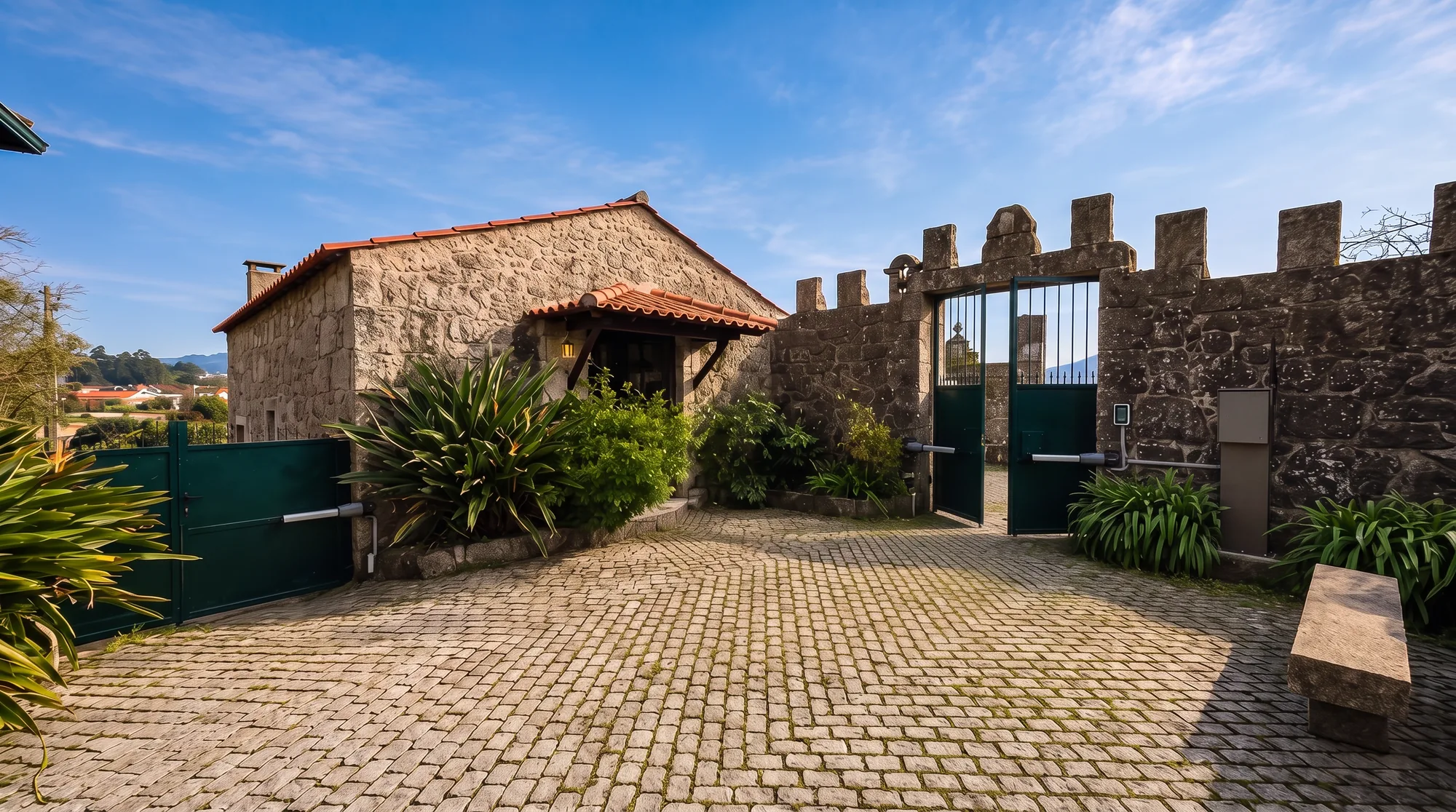
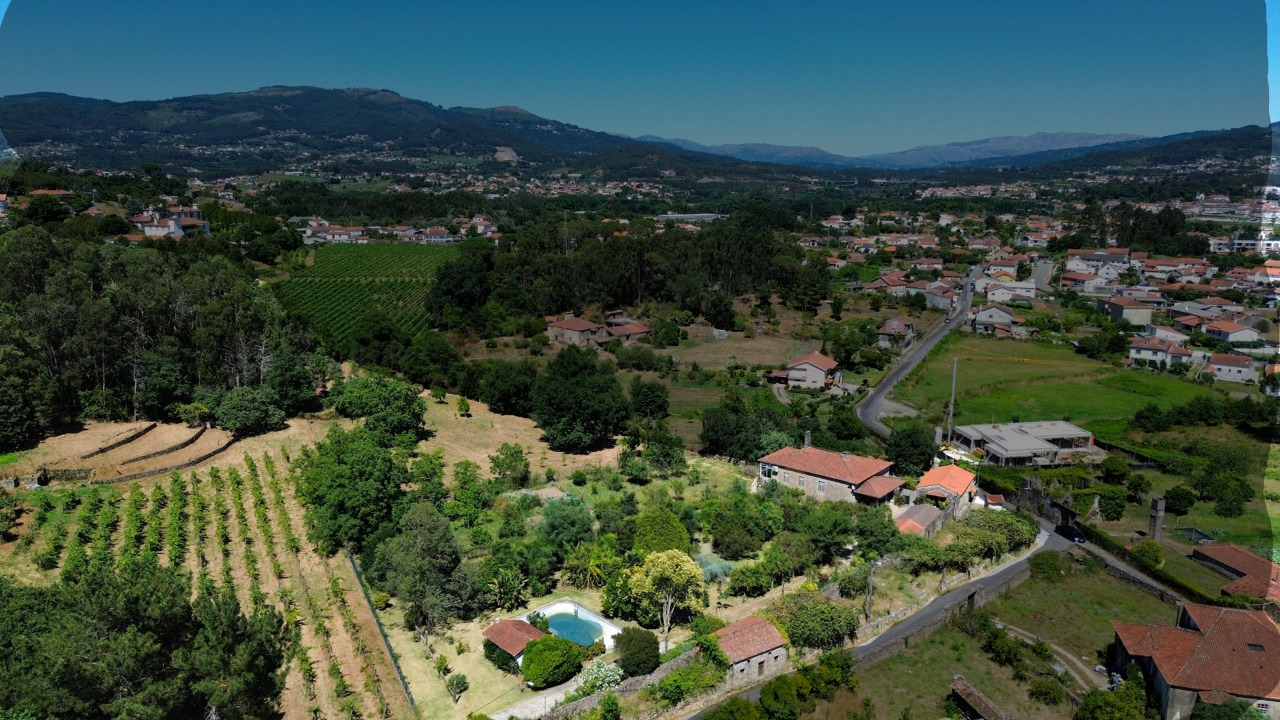
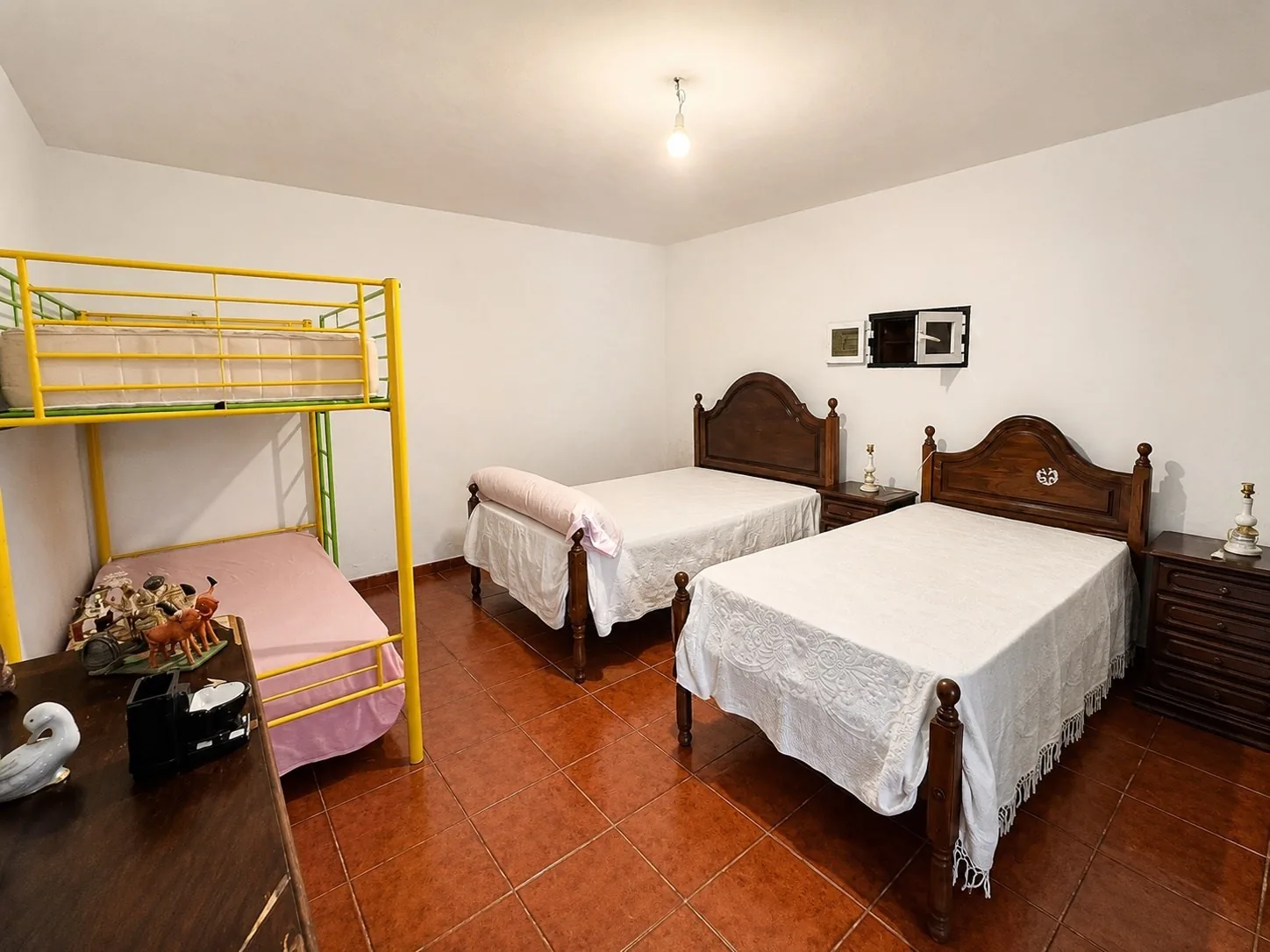
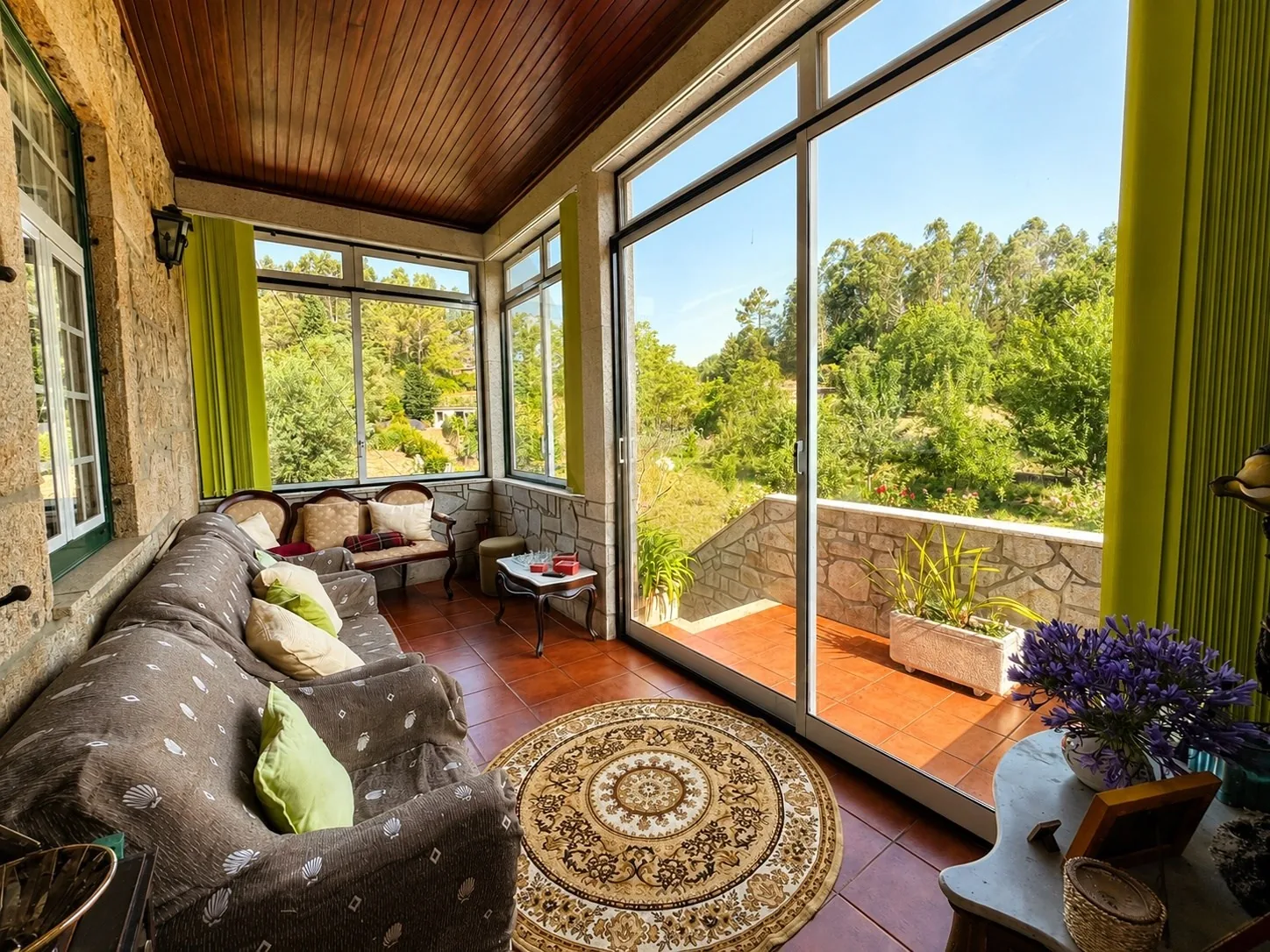
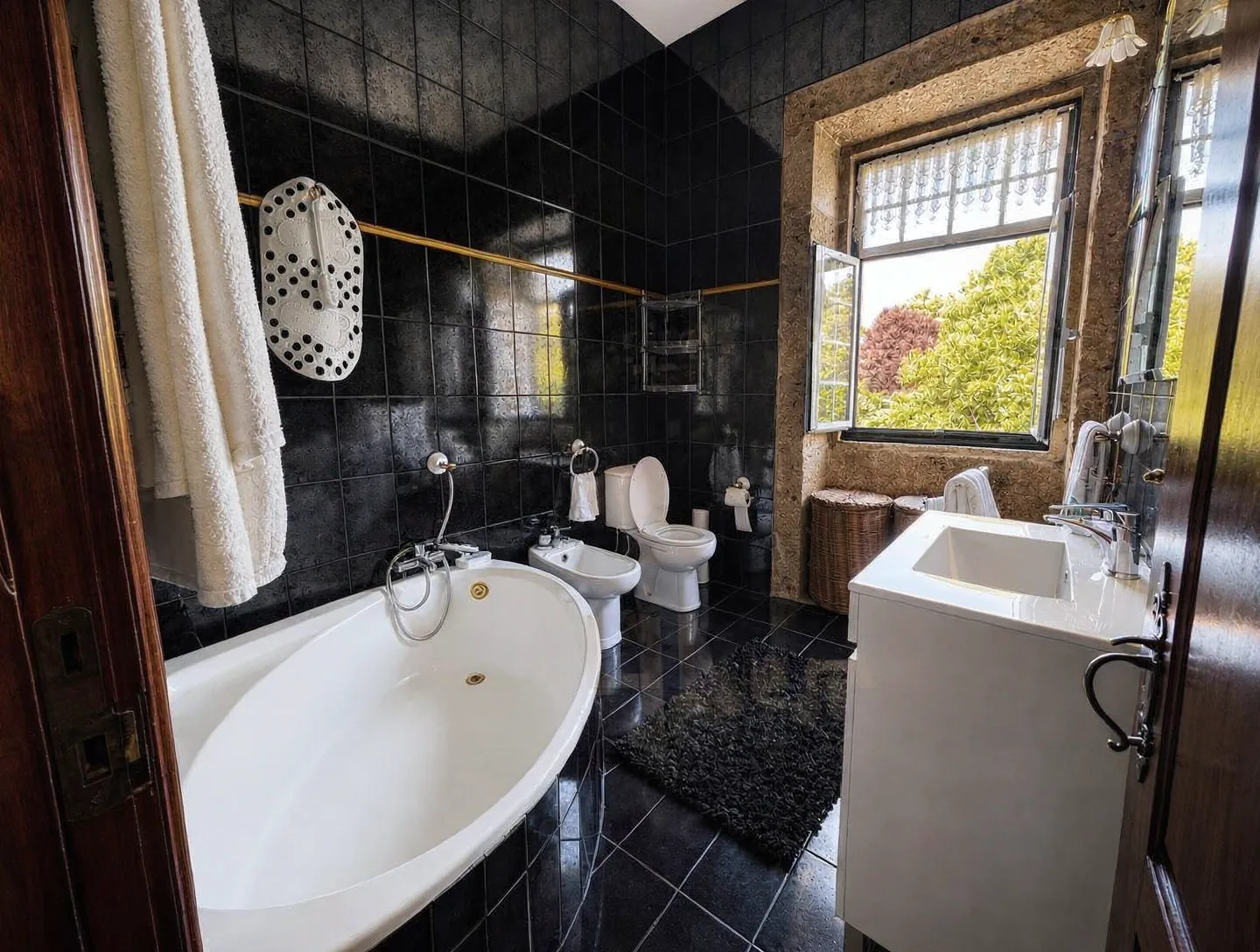
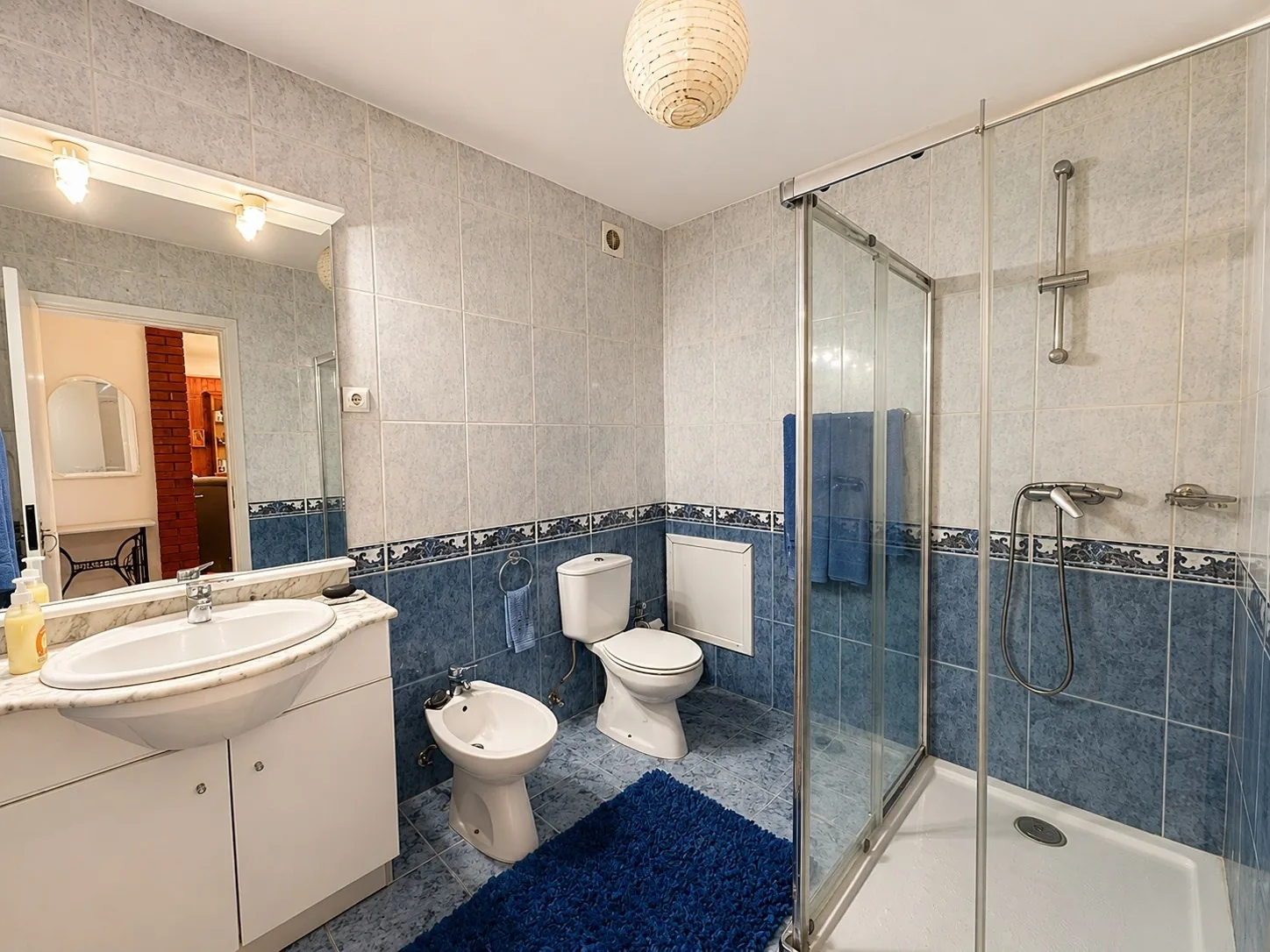
Quinta da Monte sits above Santa Comba, its granite walls and terracotta roofs looking out over the vines toward Ponte de Lima. Part of the house is old, part newer, and every corner of the grounds — the wine cellar, the spring, the orchard — has been part of daily life here for generations, long before us.
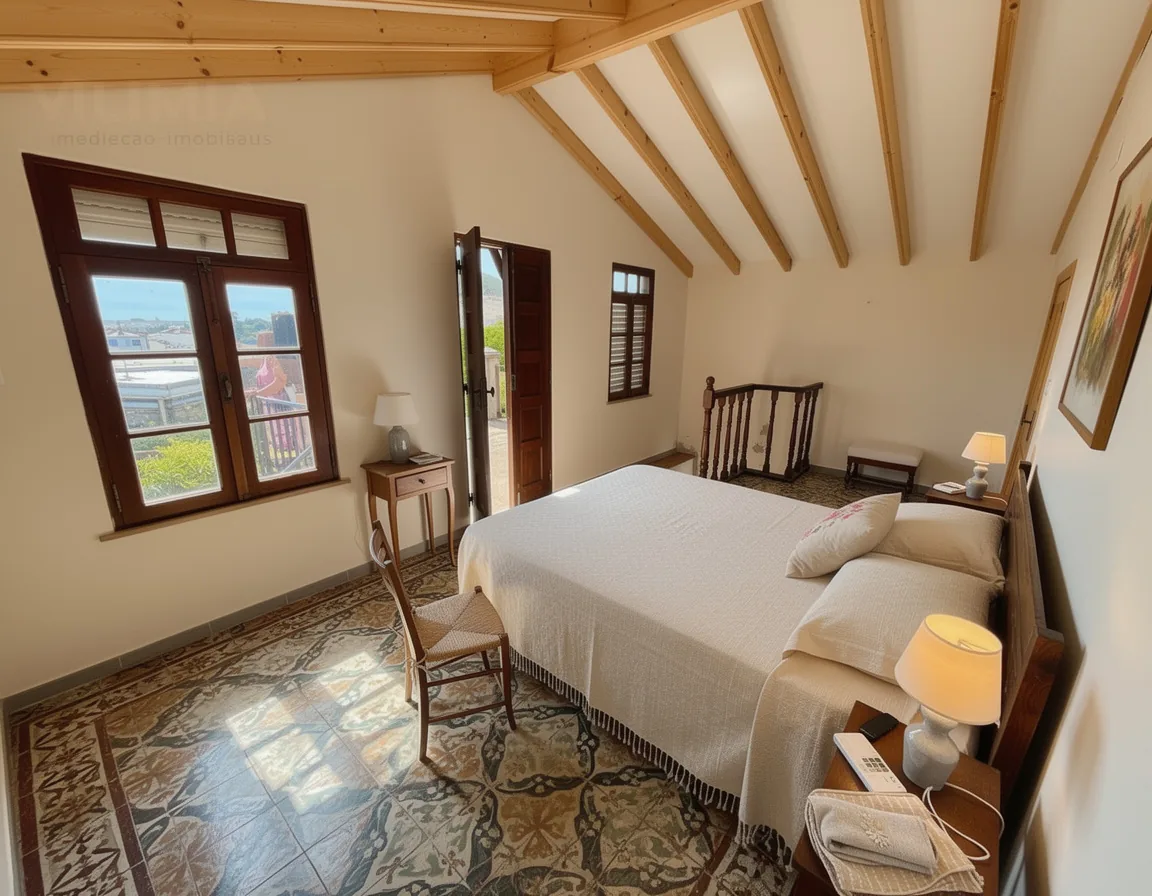
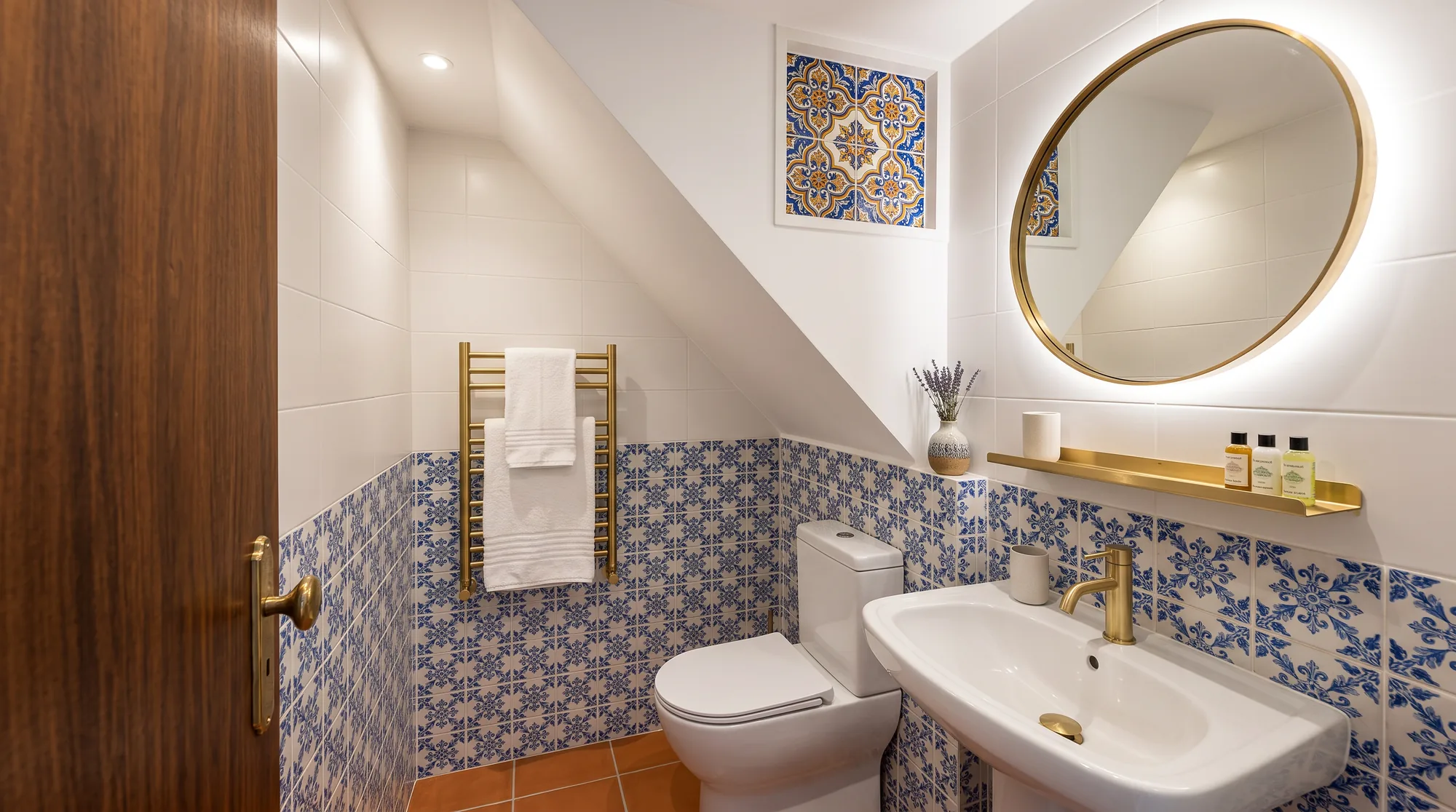
Below is a first walk through the grounds, roughly in the order you'd actually see them coming up the drive — then a look inside the house itself.
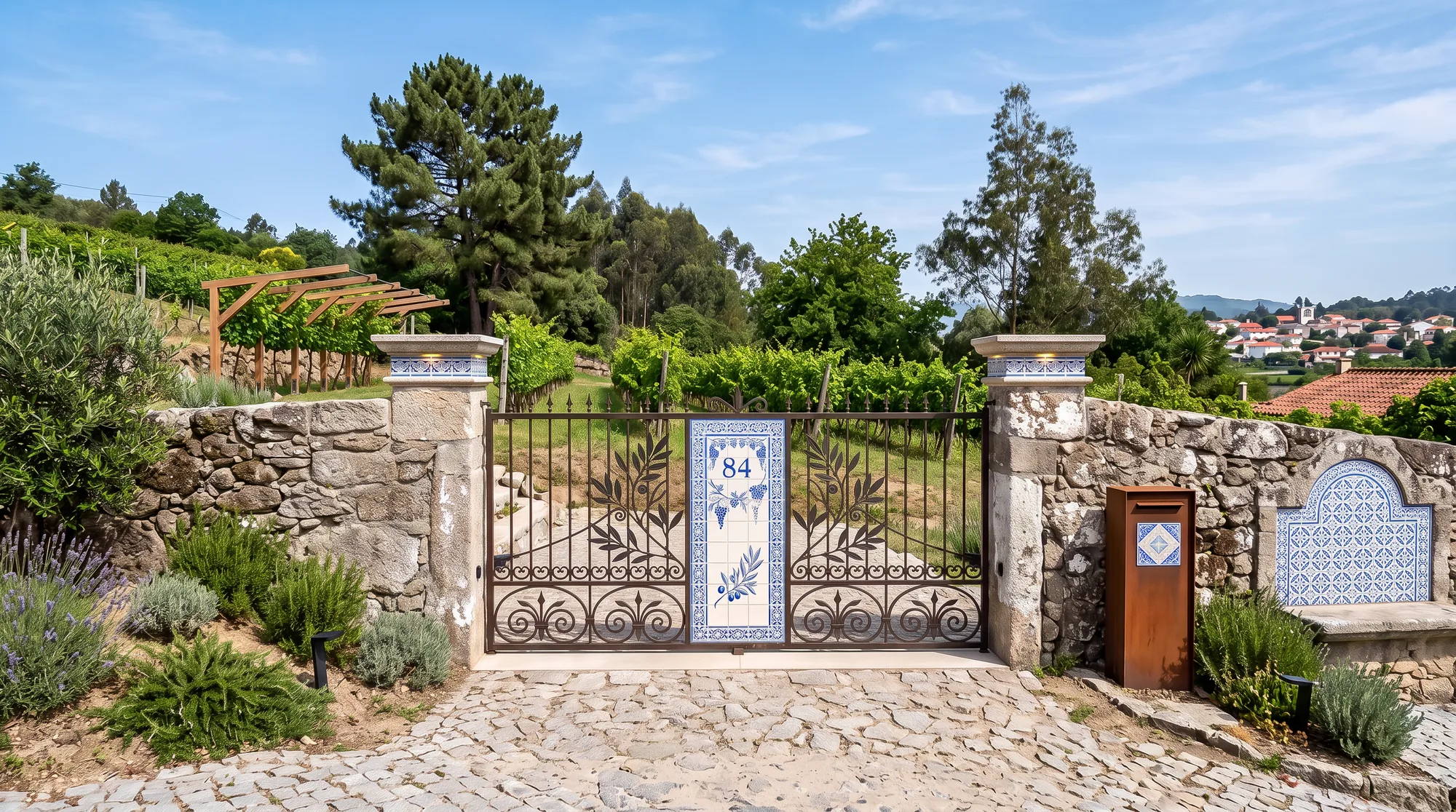
You reach the quinta through a hand-worked iron gate, its tiled panel numbered 84, set into raw granite between the vines.
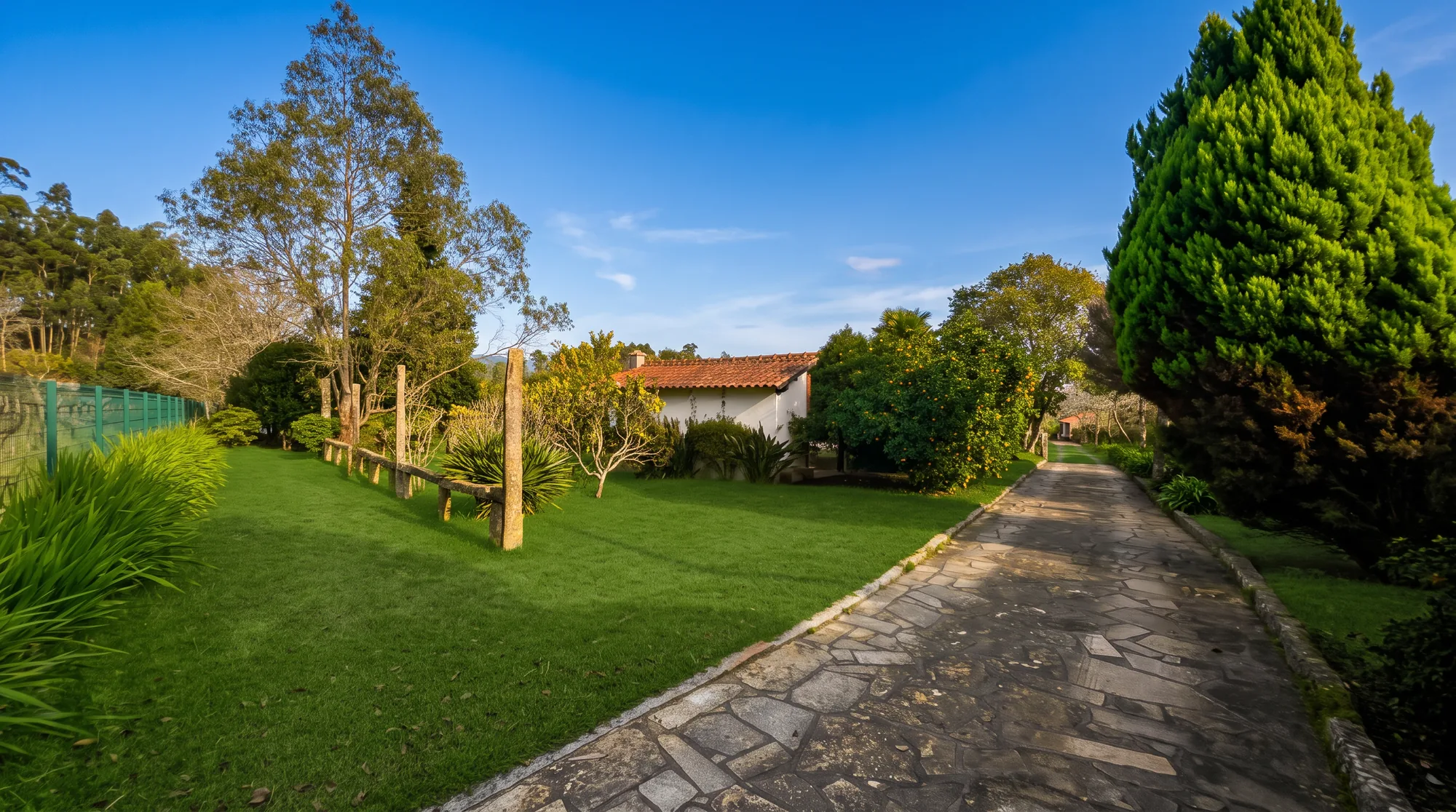
A stone path climbs gently between eucalyptus and orange trees, granite posts holding a split-rail fence along one side. It's a short walk, but it sets the pace for everything after it.
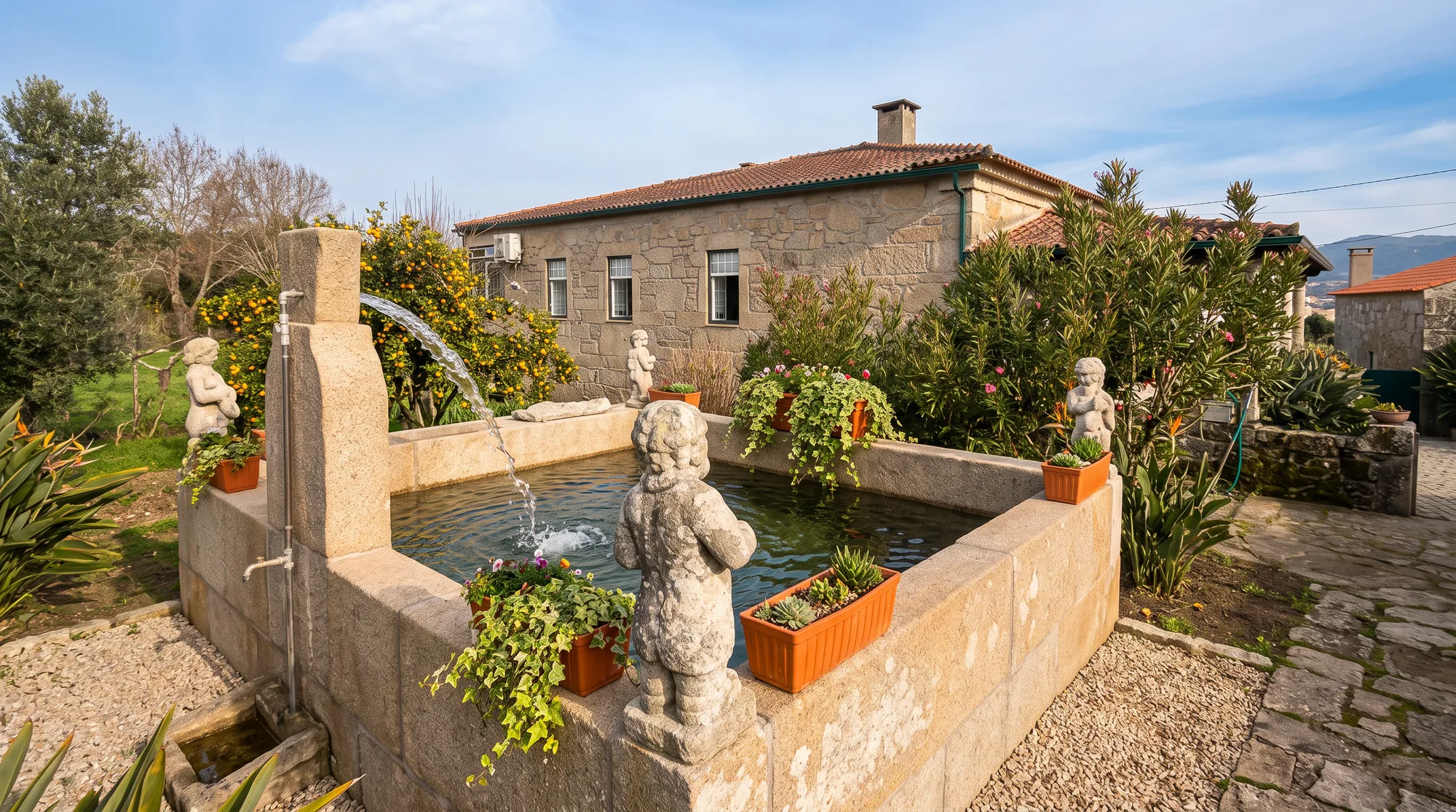
A carved granite fountain, standing since well before either of us, throws a thin stream of water past a ring of stone figures and citrus trees heavy with fruit.
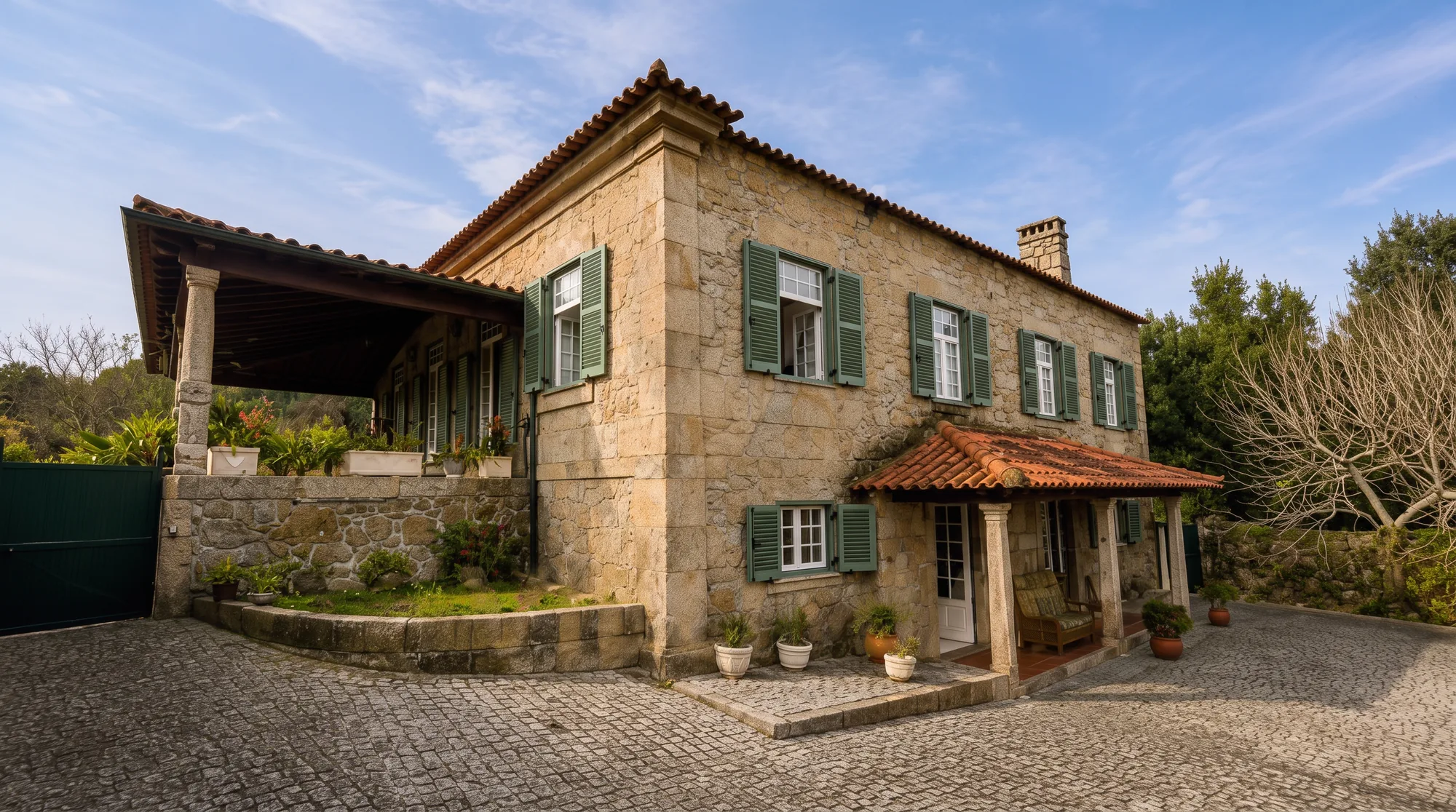
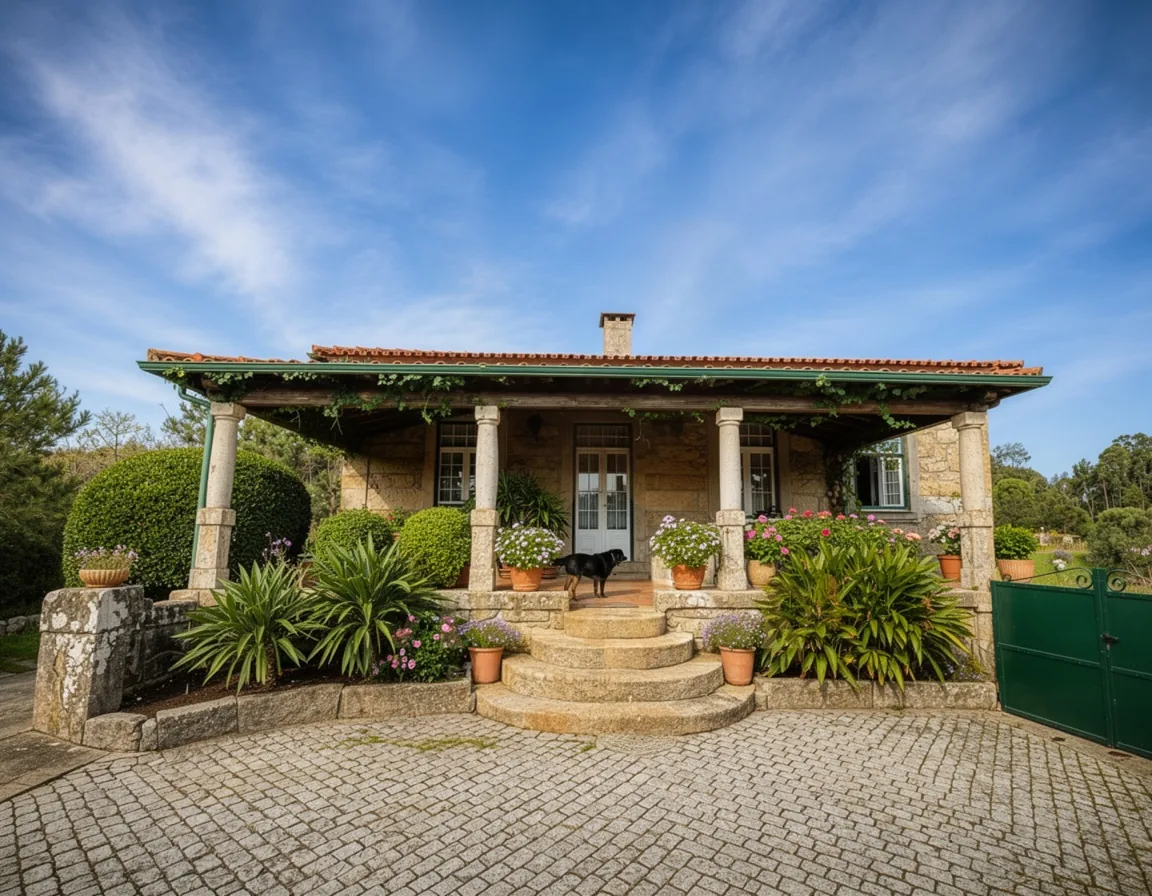
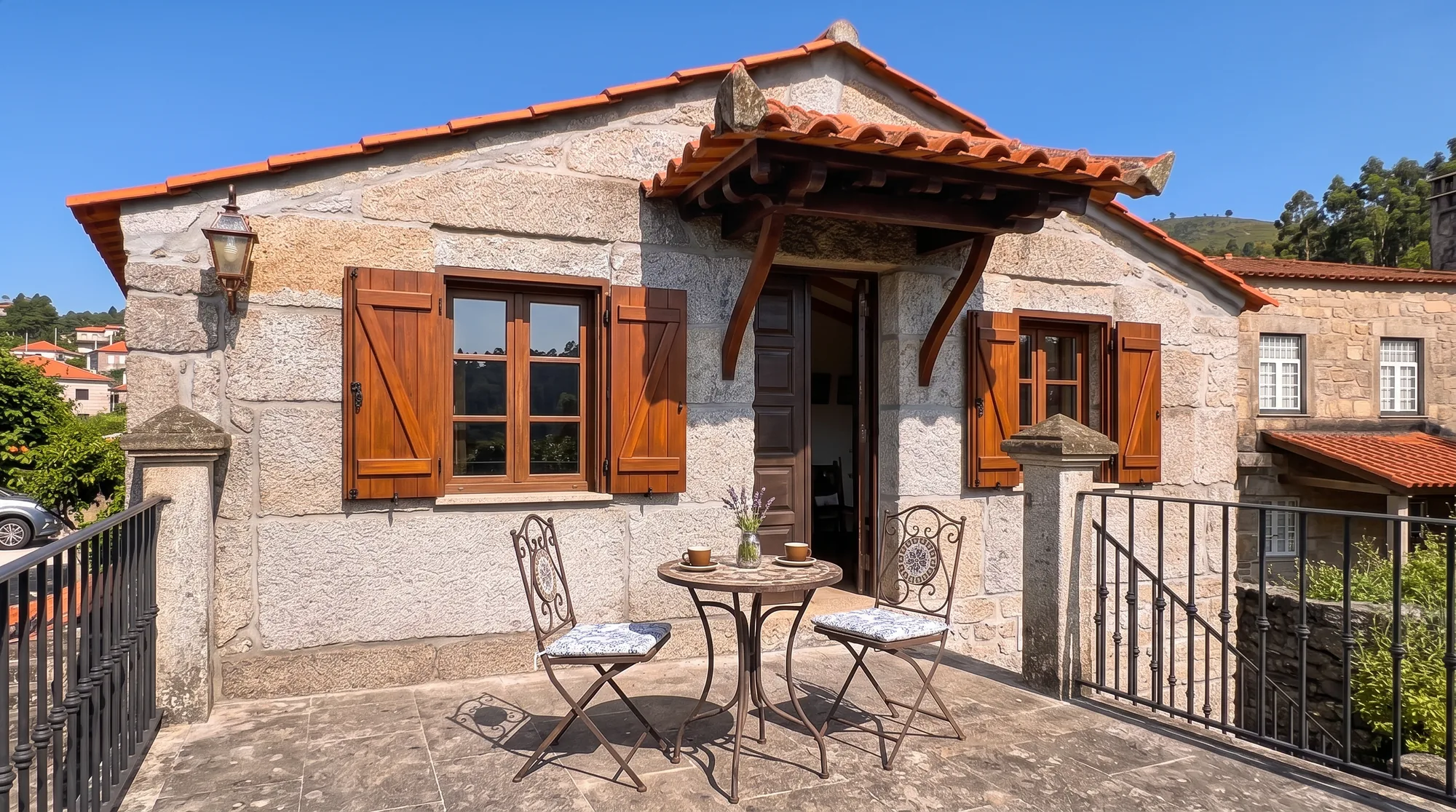
Two centuries of granite, green shutters, and a covered porch wide enough for a table and chairs. Around the corner, a second entrance with its own roofline and its own front-row seat on the garden.
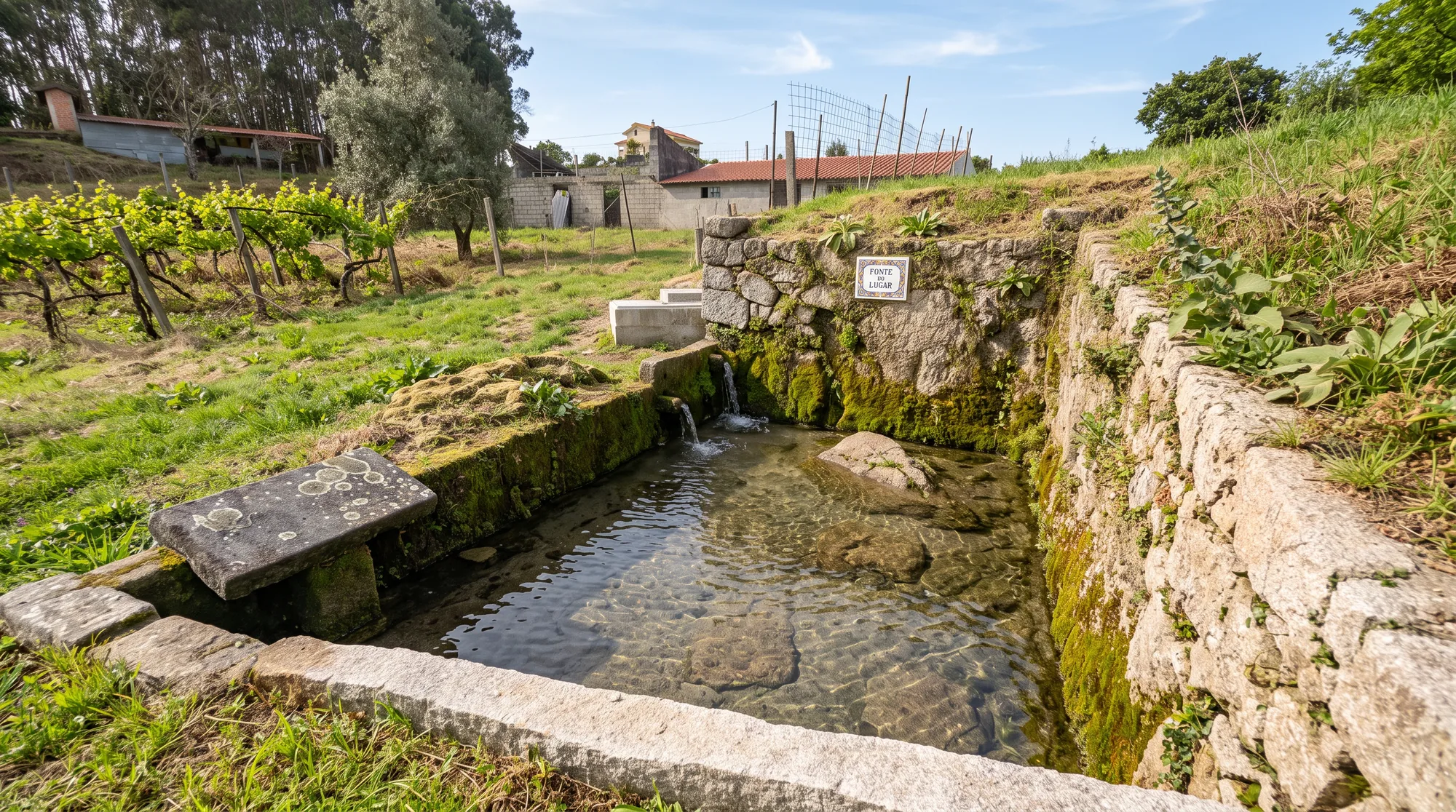
Above the vineyard sits Fonte do Lugar — not a simple spring, but an old stone-lined water mine, hand-dug into the hillside who knows how many generations ago. Nobody's traced its history yet, but it still runs cold and clear, one of two natural water sources on the property alongside the public mains connection.
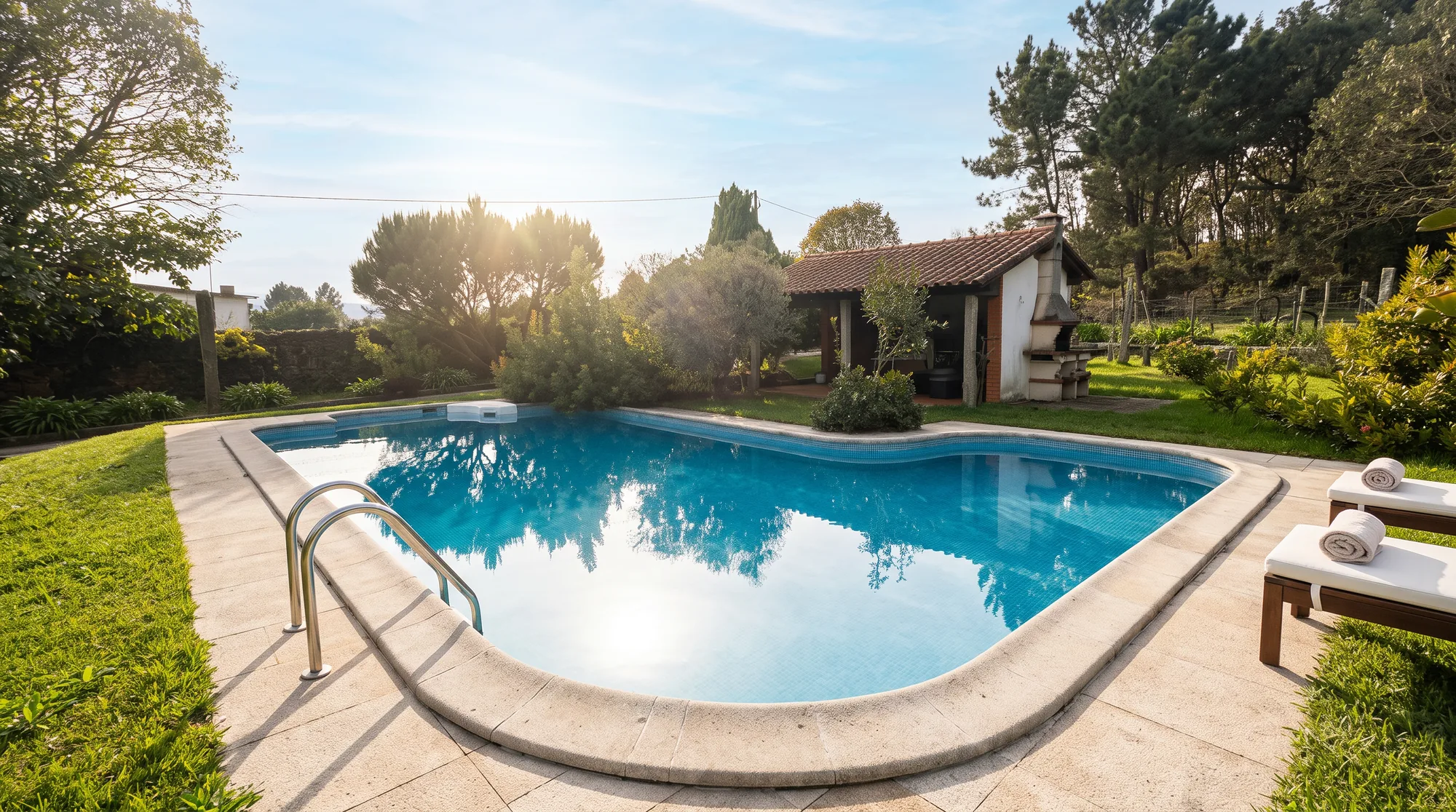
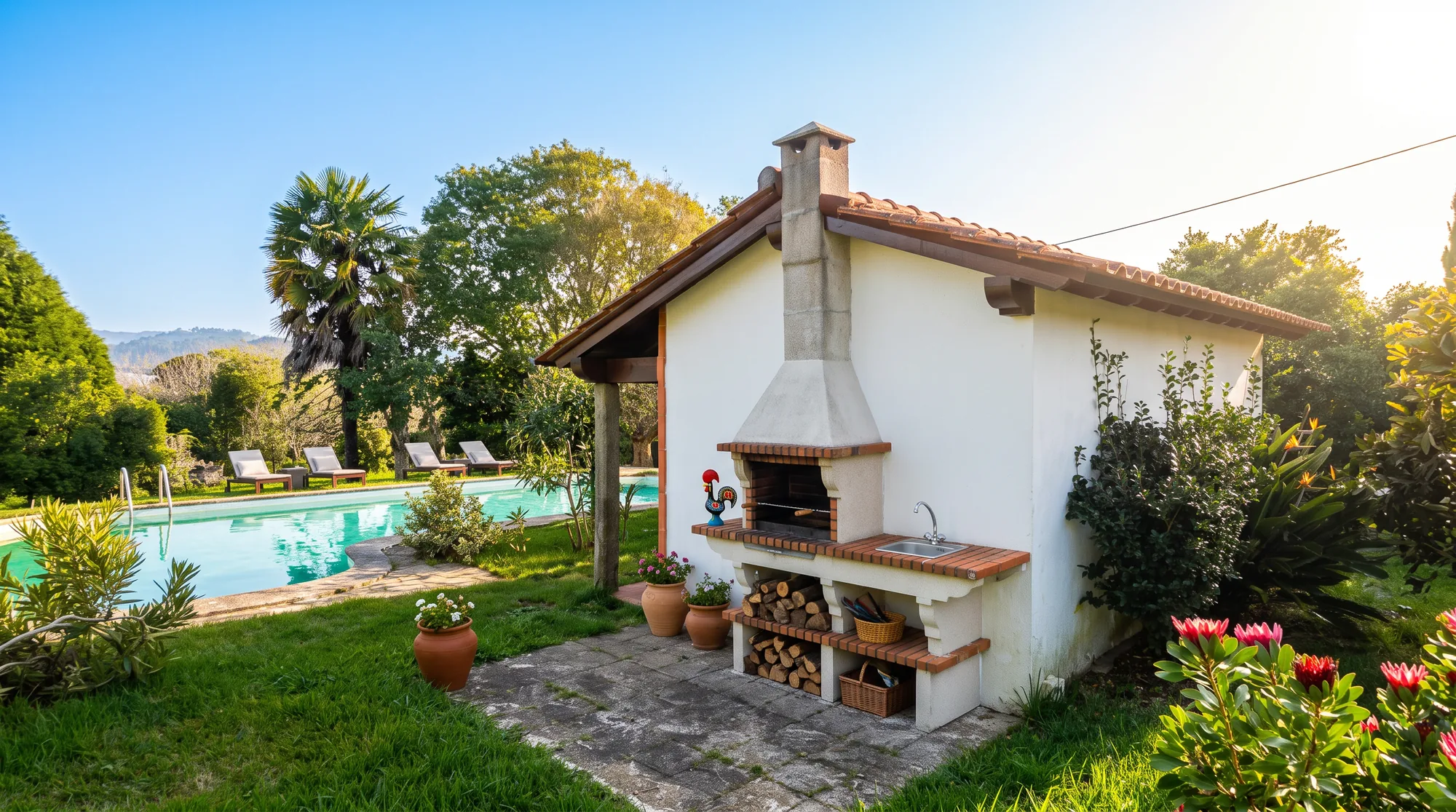
Tucked behind a hedge of pine and cypress, the pool looks out toward the hills. Beside it, a whitewashed pool house holds a proper wood-fired grill, a sink, and stacked firewood — everything a long lunch needs to become a long evening.
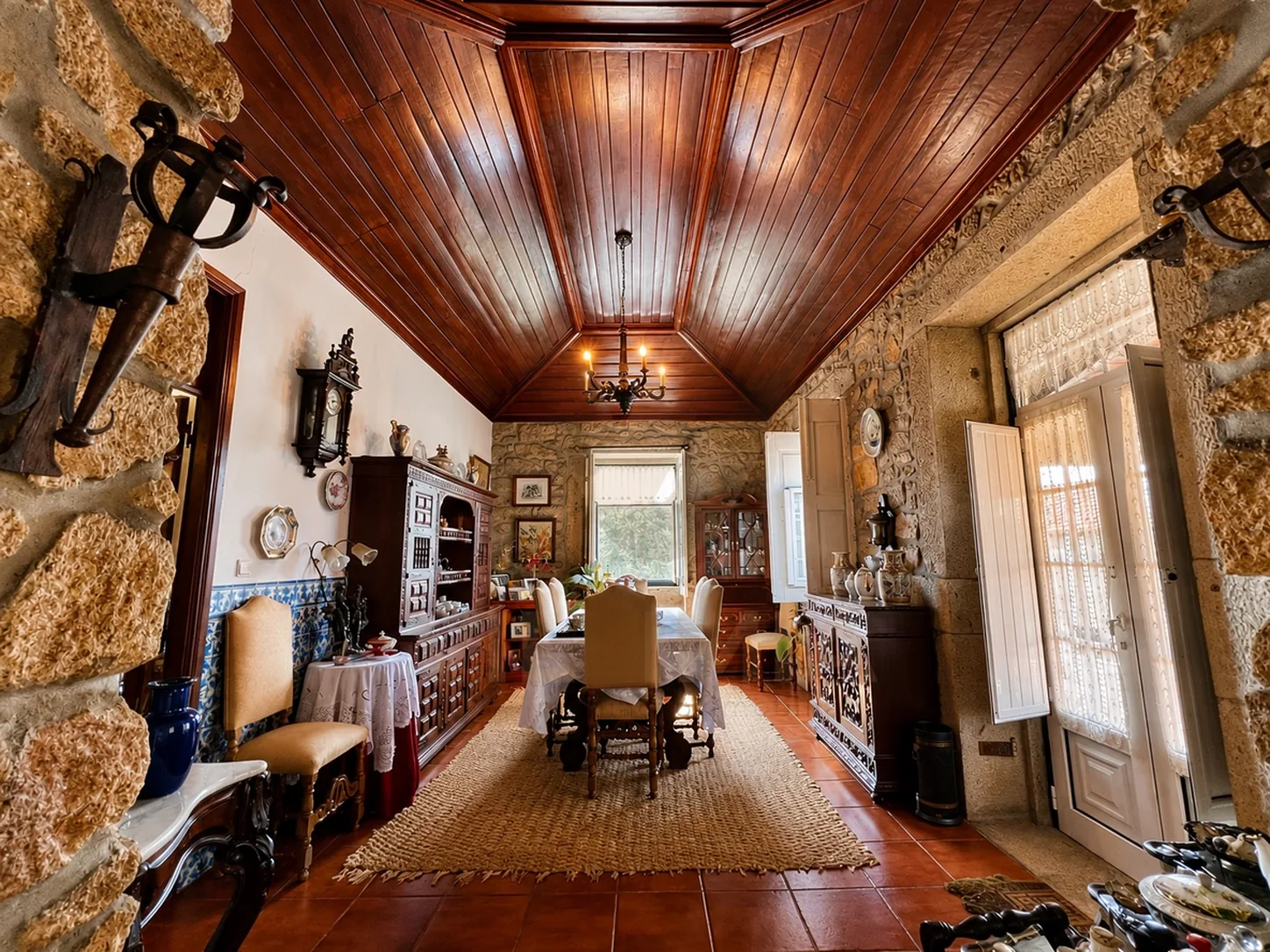
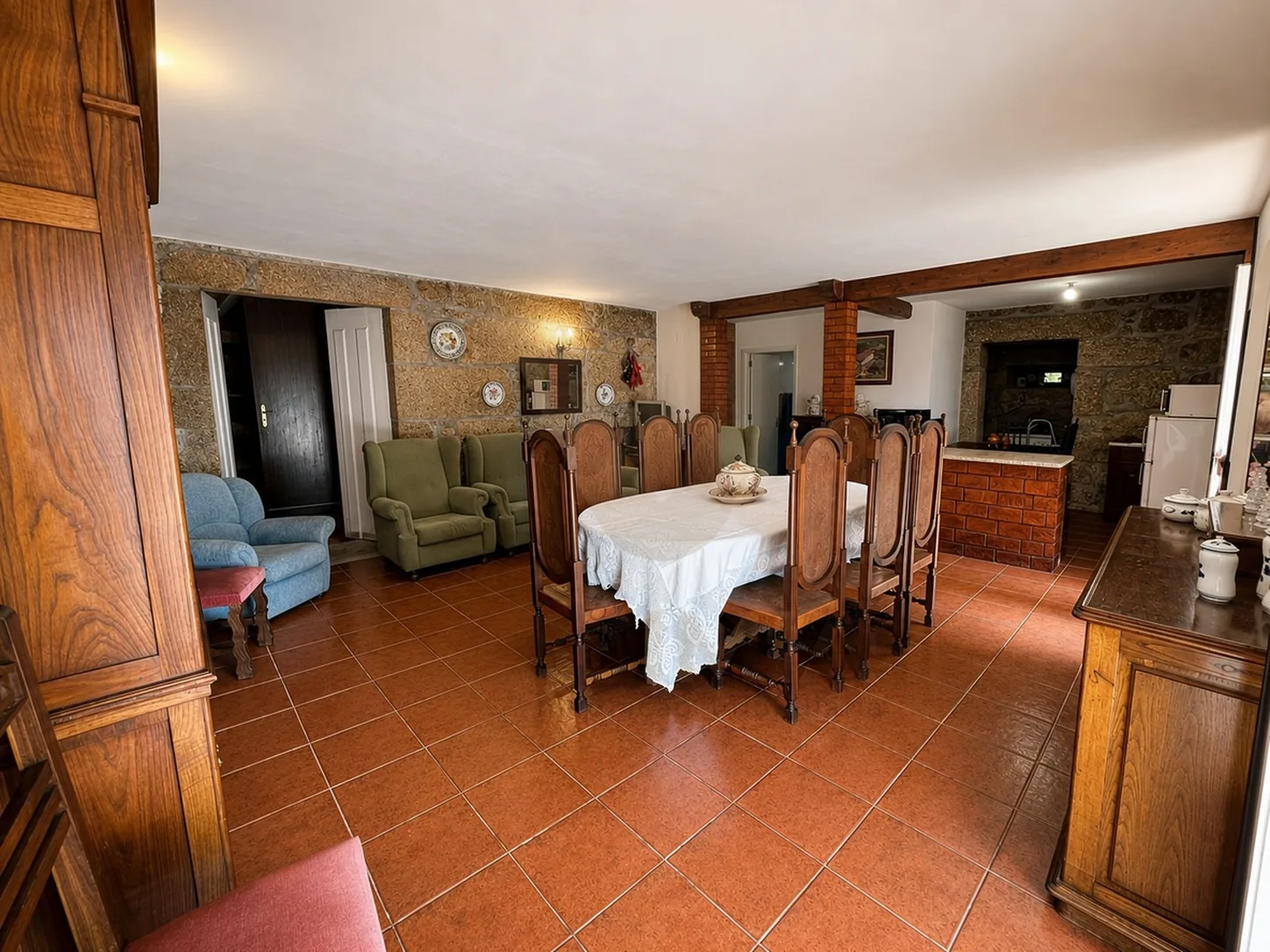
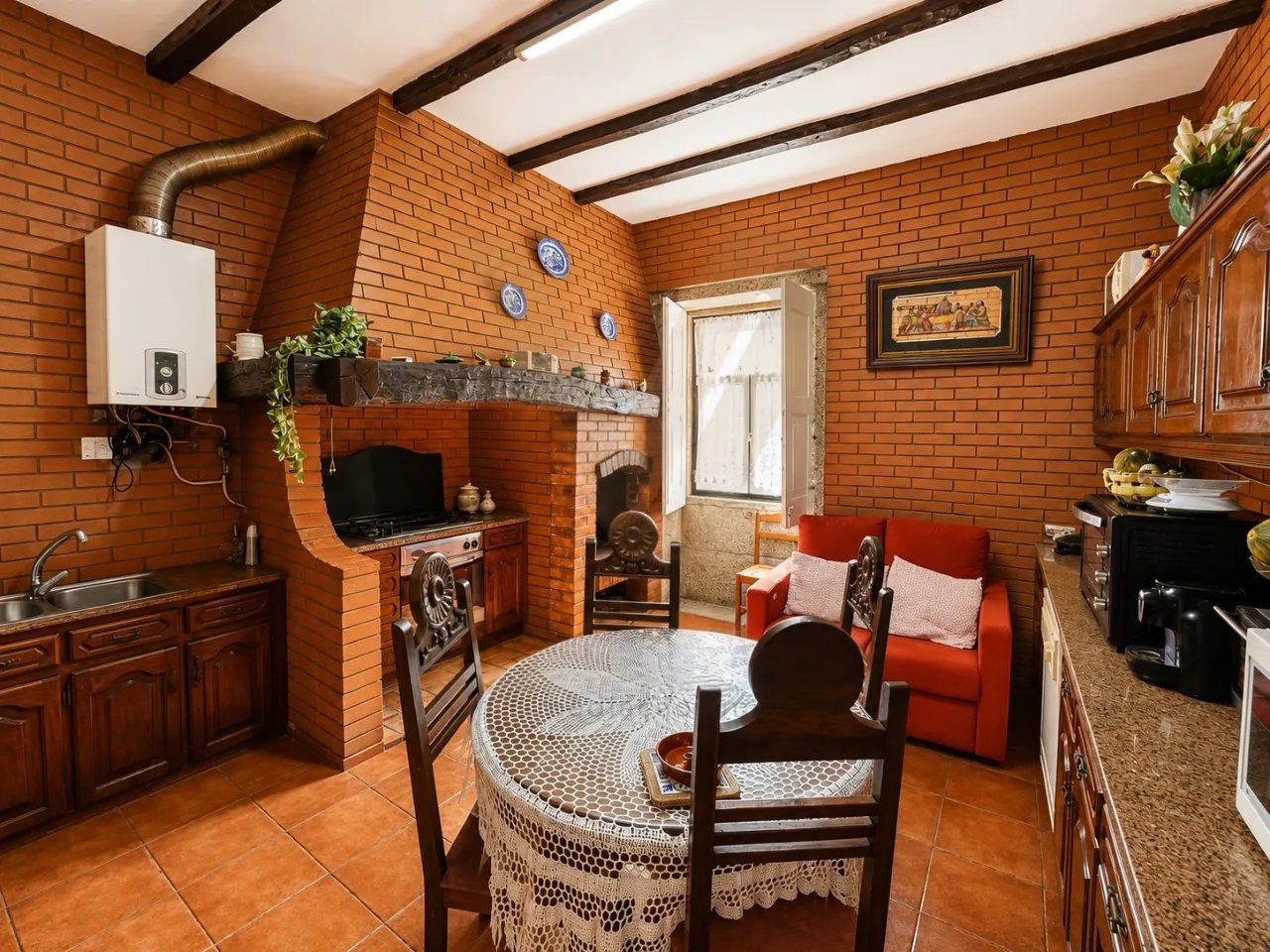
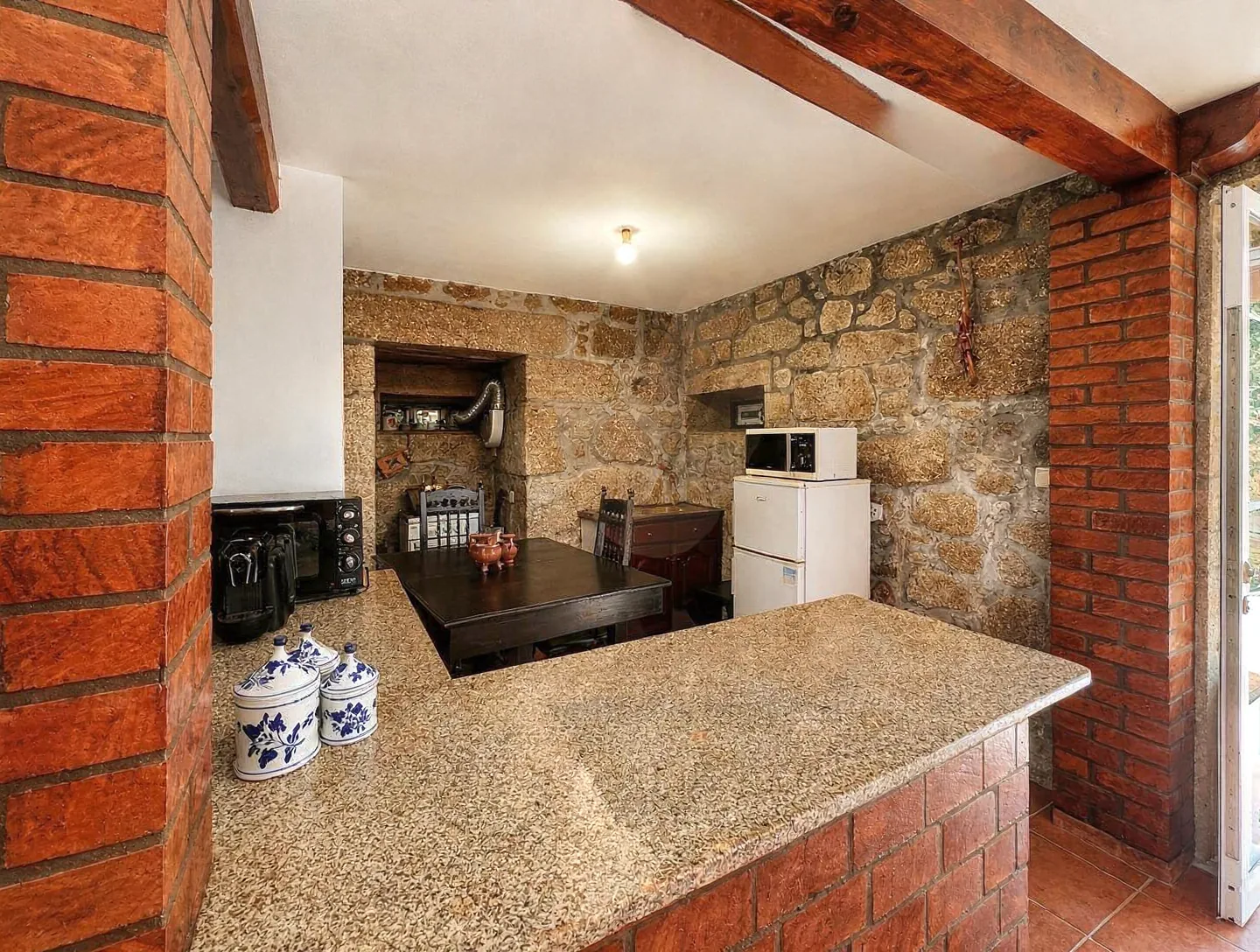
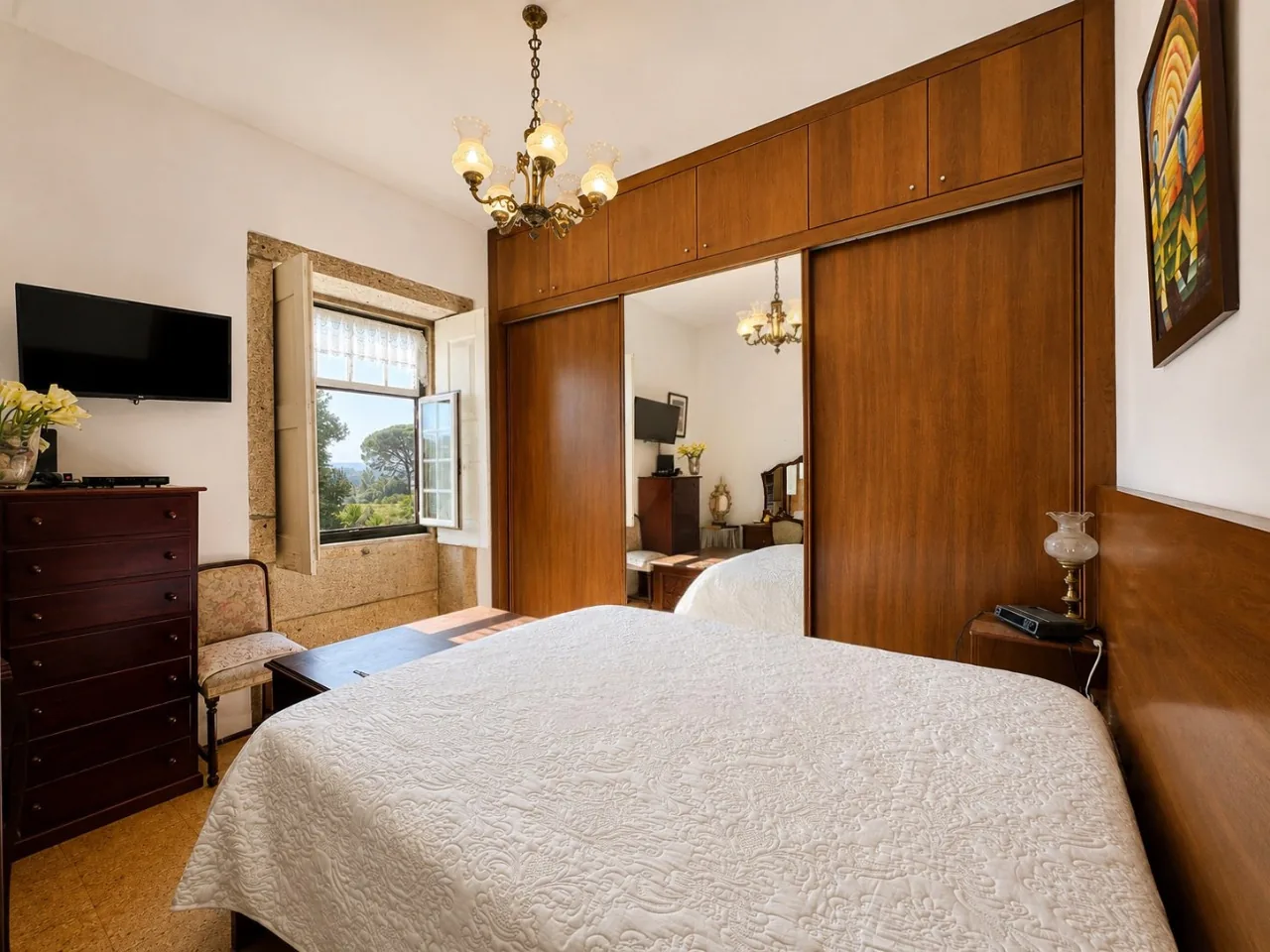
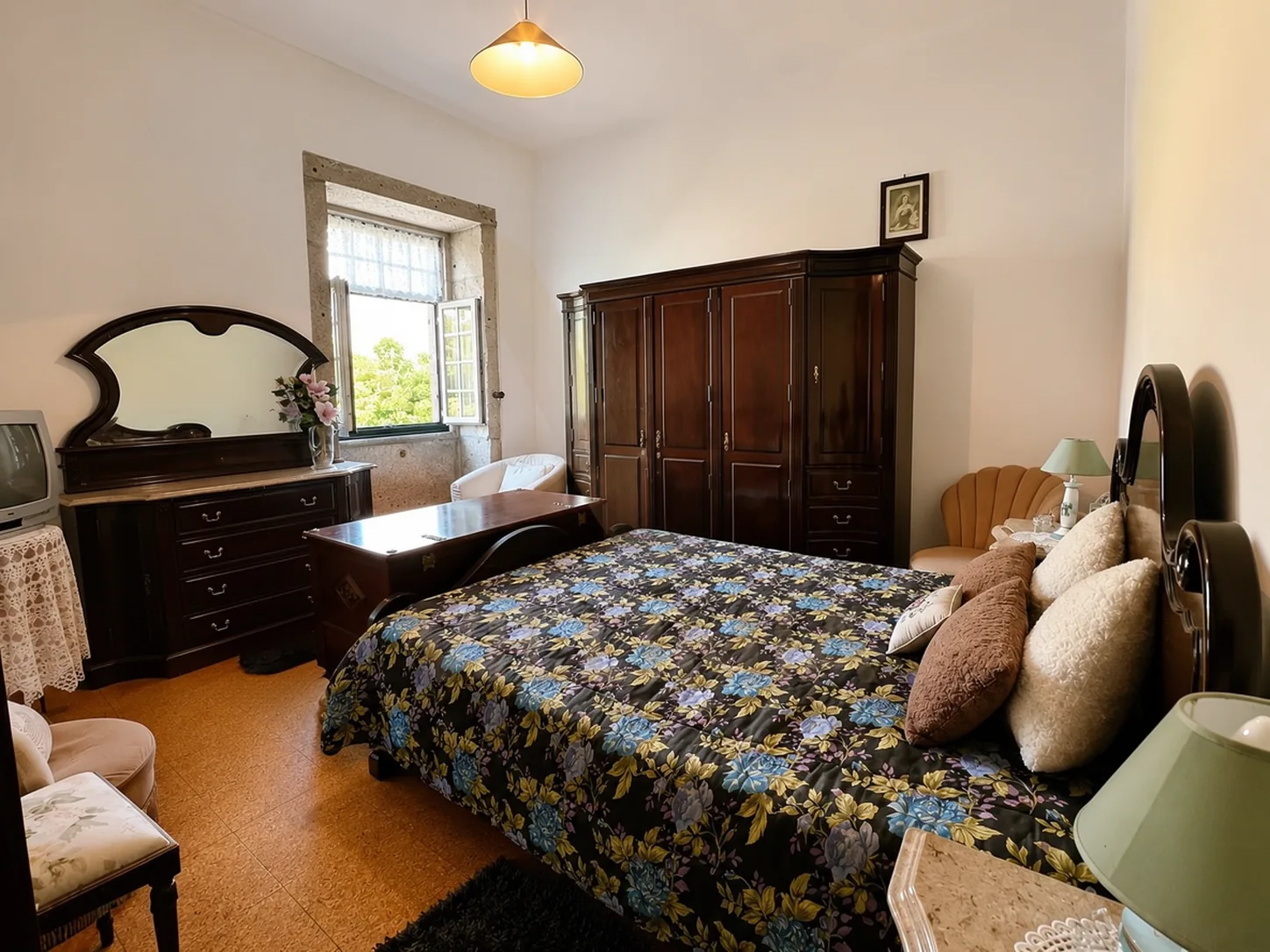
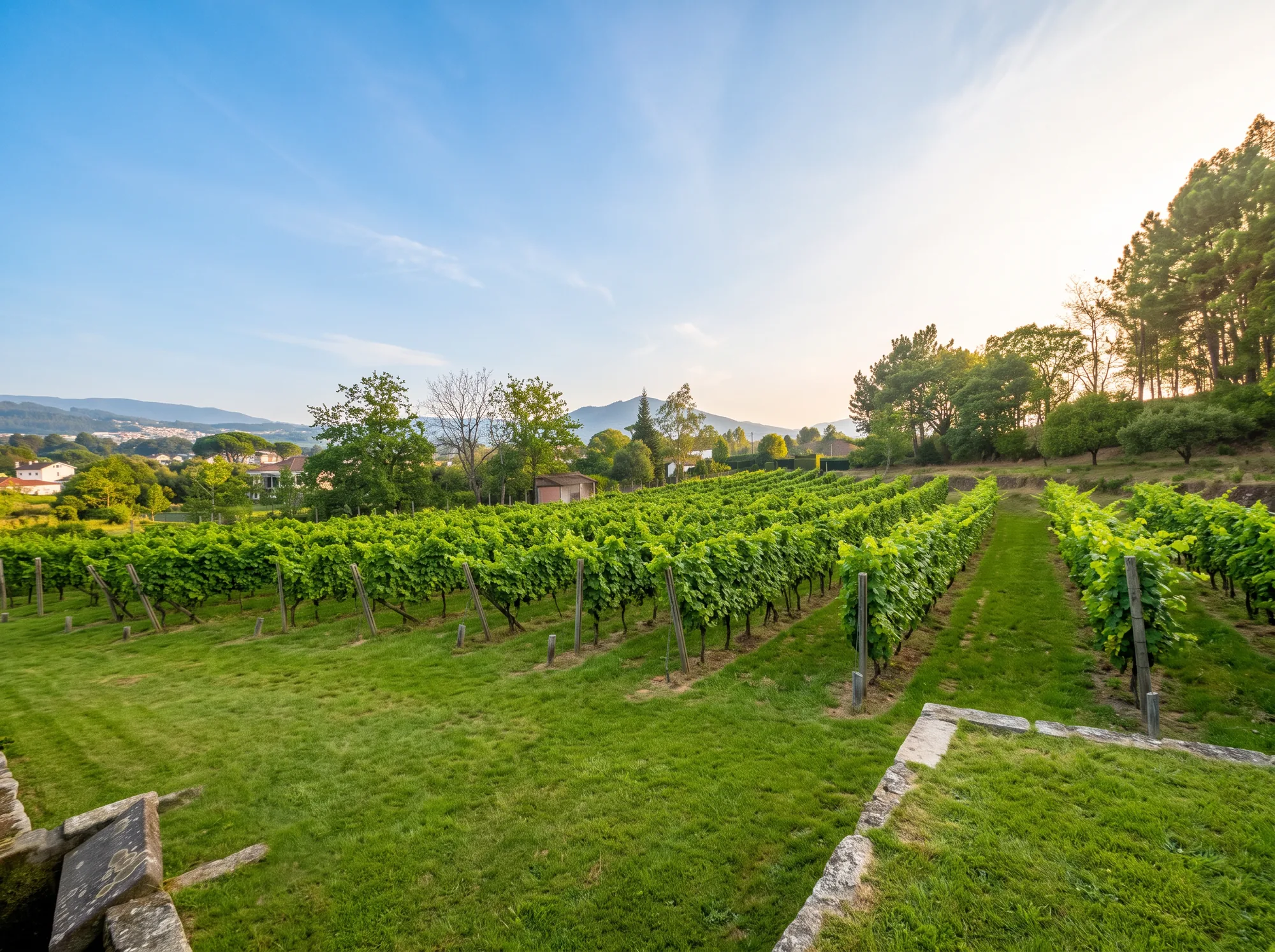
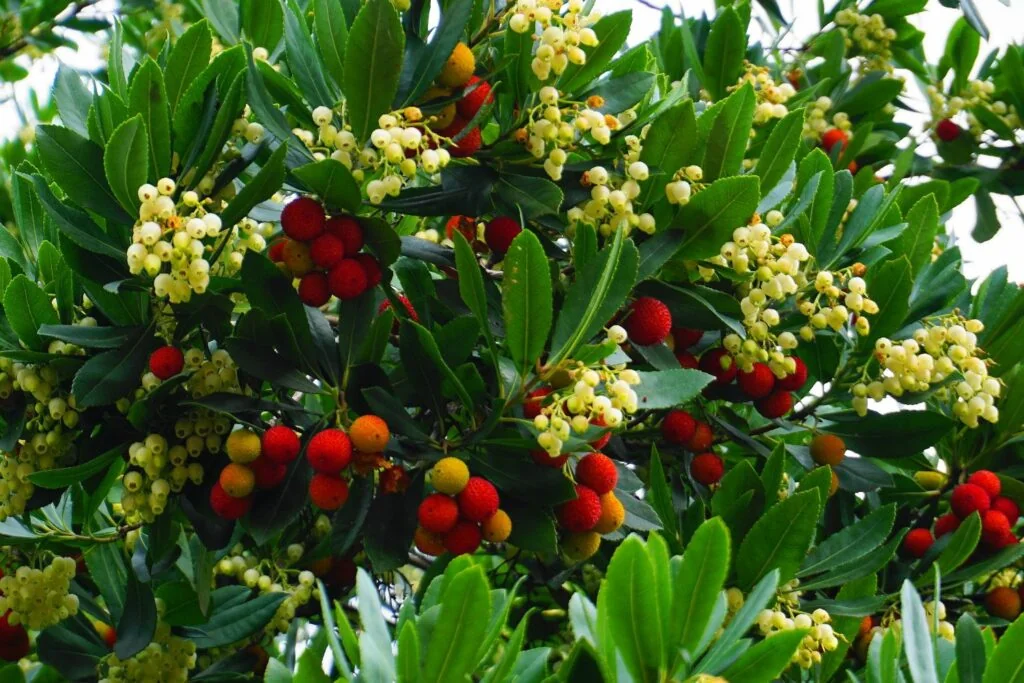
Rows of vinho verde climb the hillside in neat lines, granite posts holding them up the slope. What the photographs don't show yet is everything else growing around the edges: apples, kiwis, Cape gooseberries, pomegranates, figs, two kinds of persimmon, strawberries, plums, strawberry trees (Arbutus unedo), and a handful of others we're still identifying — a garden that's been quietly producing for longer than the house has had new owners. We'll add photos here as the seasons turn.

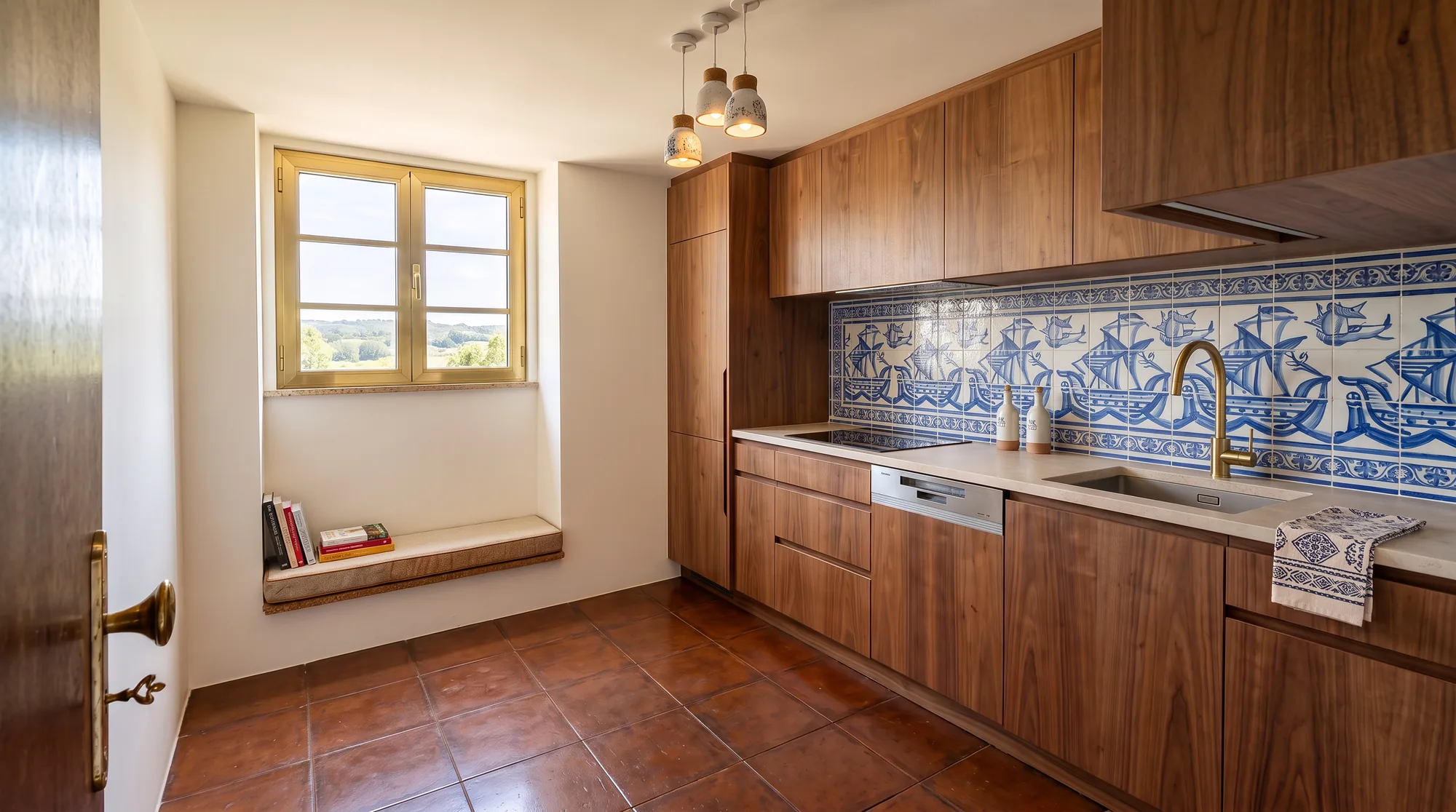
Set apart from the main house, a small stone guest house has its own terrace, its own kitchen, and its own view down toward town — a private wing for visitors, or for us, on the days we want a change of room.